What Acorn Moon Is
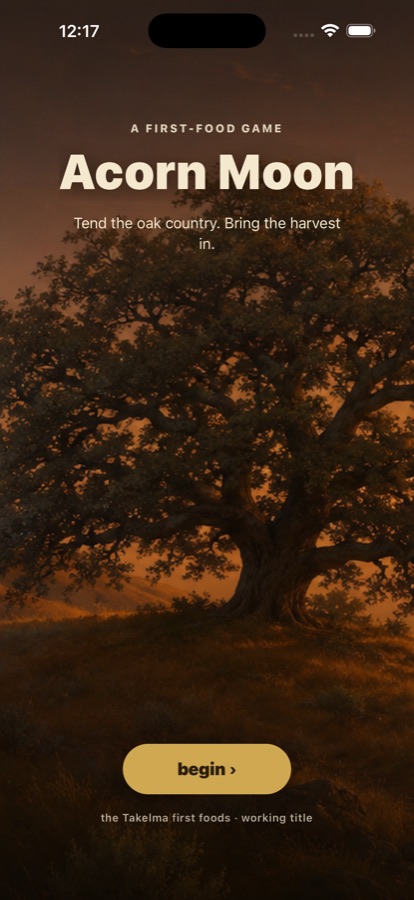
Acorn Moon is an in-development iOS game about the acorn harvest as the Takelma people of southwestern Oregon practiced it. The phrase first food carries real weight. These are the foundational foods that anchored a people to their land, gathered, processed, and shared in ways that passed from one generation to the next across centuries. The game puts those practices into your hands as a cozy, no-fail sequence of small acts, five felt little rites that walk the acorn foodway from gathering to completed food.
It is a sibling to Salmon Run, another title in the same family, and it shares that game's design ethic: a quiet iOS experience built to teach without testing, to pass something along without pressure. This is a first look at a work in progress. Acorn Moon is not yet on the App Store.
Five Rites and a Filling Moon: How Acorn Moon Plays
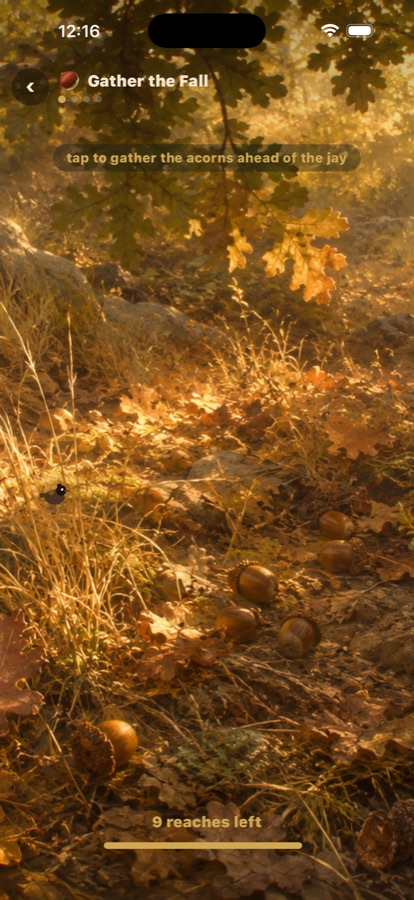
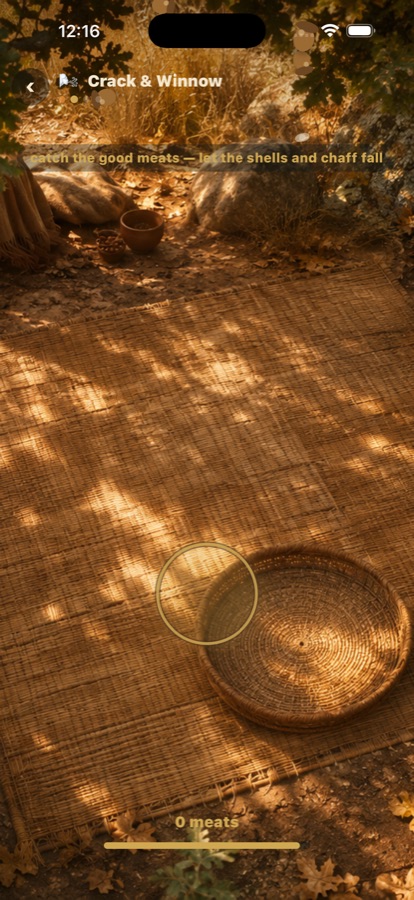
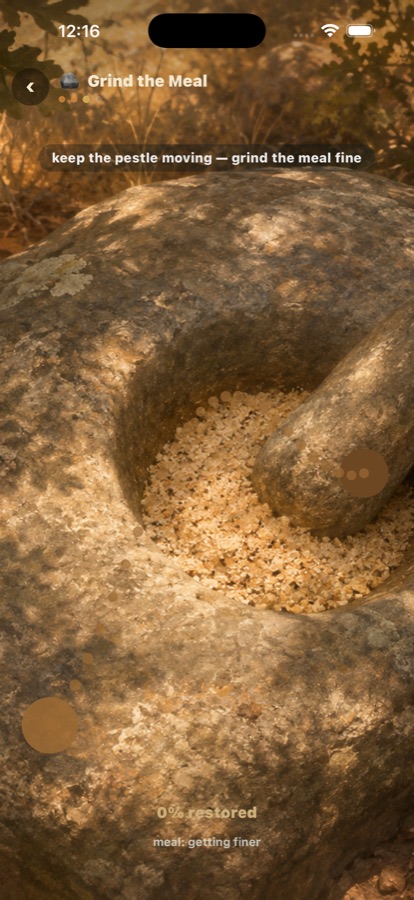
The game is organized around five small rites, gentle tactile interactions that correspond to the stages of the acorn foodway. You work through the harvest in the order the work itself unfolds: gathering, cracking, leaching, grinding, and preparing the food. The game holds no score and no failure state. It responds to your attention, and the moon overhead comes in fuller the more carefully you tend each stage.
The moon reads as the game returning what attentive work gives back, a slow brightening that reflects the quality of care. The better you tend, the fuller the moon, and a full moon is simply the harvest complete and the food made. The no-fail frame keeps the foodway open to everyone who comes to it, without the added weight of a pass-or-fail outcome laid over a practice that already carries its own history.
The Takelma Acorn Foodway and Why It Matters
The Takelma homeland lies along the upper Rogue River valley of what is now southwestern Oregon. Acorns were among the first foods at the center of their lifeways, gathered in fall and processed through labor-intensive techniques that turned a bitter, tannic nut into a flour and porridge capable of sustaining a community through winter. This was deep practice, tied to specific oaks, specific seasons, and specific knowledge held by specific people across generations.
Foodways like this one are under real pressure. The disruptions of the last two centuries, including removal, the boarding school era, and the severing of land relationships, put distance between communities and the practices that once moved freely between grandmothers and grandchildren. Some of that knowledge persists. Some of it has grown thin. The work of games like Acorn Moon is to put the foodway back within reach, as a first encounter and a point of entry, even through a screen.
The ecological stakes are inseparable from the cultural ones. The oaks that produce the acorns are themselves part of managed landscapes, shaped over generations by deliberate human care, including fire tending. When a foodway fades, the ecological relationship that sustained it tends to fade alongside it. Restoring even a felt sense of the harvest is part of restoring attention to what the land and the practice ask of each other.
What Acorn Moon Teaches: The Educational Model
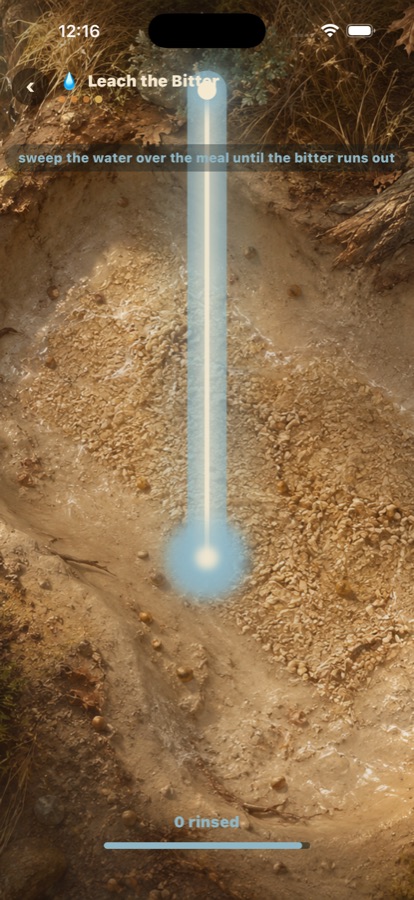
Acorn Moon teaches the acorn foodway by embedding its stages in the act of playing. Each of the five rites corresponds to a real step in the work: gathering from the right trees at the right time, cracking the shells, leaching out the tannins with water over an extended stretch, grinding the meal, and making the food. The game places these steps in your hands and asks you to attend to them, one after the next, at the pace the work itself takes.
The educational model is gentle tending as instruction. You learn the foodway by moving through it, stage by stage, at the pace the work actually requires. A child who plays through the five rites comes away with a felt sense of what the harvest involves: the shape of it, the sequence, the labor, and the relationship between the food, the land, and the care a person brings. That felt sense holds the outline of the practice while leaving room for the full depth of a lifelong one. It is the beginning of wanting to know more, and that is the pedagogical opening the game is designed to create.
What the Work Is For
Acorn Moon is meant to put the acorn foodway within reach for Takelma people and their descendants, and for anyone who wants to understand what first foods mean as a living system of knowledge. The game aims at a first encounter, one that leaves a player with curiosity and a sense of the harvest's shape and meaning. The comprehensive record of the practice belongs to the community, its elders, and the land itself.
The longer purpose is cultural transmission. Games reach young people in ways that books and lectures do not always manage, and a child who grows up having moved through the five rites of the acorn harvest carries a small piece of that knowledge forward as something felt and personal. If that entry leads toward the deeper practice, toward elders, toward the land, toward the harvest itself, then the game has done what it was built to do.
The work is offered in the same spirit as the harvest it depicts: something tended toward completion, with care for the community it belongs to and the generation that comes next.